

With exports surging 27% in early 2026 and major expansion projects advancing from Senegal to Mozambique, Africa’s liquefied natural gas sector is entering a decisive new chapter. For investors, operators, and policymakers, the question is no longer about potential—it’s about execution.
The Big Picture: A Continent on the Rise
Africa’s LNG story has shifted fundamentally. What was once a narrative of untapped potential is now one of tangible growth. In the first quarter of 2026, African LNG exports climbed 27% year-on-year to reach 11.32 million tons, accounting for nearly 10% of global LNG supply. This surge has been accelerated by global energy dynamics—particularly supply disruptions in the Middle East following the 2026 Strait of Hormuz crisis—which have forced European and Asian buyers to diversify their sources.
But the real story lies beneath these headline numbers. Across the continent, a new wave of projects is moving from discovery to production, from expansion to optimization, and from ambition to delivery.
West Africa’s LNG Powerhouse: The GTA Success Story
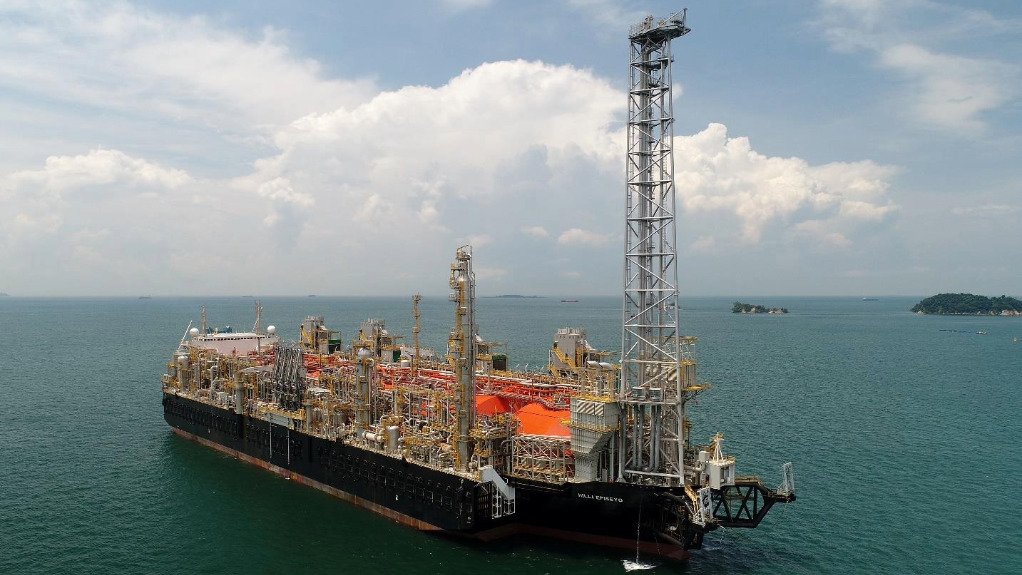
The Grand Tortue Ahmeyim (GTA) project, straddling the maritime border of Senegal and Mauritania, has emerged as the crown jewel of Africa’s new LNG wave. Following first LNG delivery in 2025, the project delivered a record-breaking first quarter in 2026, with Kosmos Energy announcing net quarterly production of 17,000 barrels of oil equivalent per day—exceeding the floating liquefaction unit’s nominal capacity.
The numbers tell the story of operational excellence:
- 9.5 gross LNG cargoes loaded in Q1 2026, in line with forecasts
- 32 to 36 cargoes targeted for the full year
- Operating costs down more than 50% year-on-year, driven by FPSO refinancing completed in January 2026
- LNG cargo volumes expected to nearly double compared with 2025’s 18.5 gross cargoes
The project’s success has had an immediate impact on export statistics. Mauritania’s LNG exports surged from just 42,000 tons in Q1 2025 to 703,000 tons in Q1 2026—a staggering 1,574% increase. Senegal, while not yet a direct exporter, is poised to benefit from domestic gas allocations as Phase 1+ focuses on supplying local markets.
Kosmos Energy, serving as Diamond Sponsor and Opening Ceremony Host for African Energy Week 2026, has positioned GTA as the centerpiece of its Africa growth strategy. The company is now advancing Phase 2 expansion plans aimed at roughly doubling liquefaction capacity before the end of the decade—representing one of the clearest near-term LNG growth opportunities on the continent.
Beyond GTA: A Continent-Wide Expansion
While GTA captures headlines, LNG activity is accelerating across multiple African frontiers.
Senegal’s Yakaar-Teranga: The Next Giant
Senegal’s Yakaar-Teranga discovery remains one of the world’s largest undeveloped gas resources. Still in pre-final investment decision phase, the project’s commercial structure—particularly the balance between domestic supply and LNG exports—is currently under negotiation. The resource has the potential to underpin future LNG trains, long-term gas-to-power supply, and industrial feedstock development, making it a focal point for upstream financiers evaluating scalable, long-life reserves.
Nigeria: Doubling Down on Gas
Nigeria, already Africa’s largest LNG exporter with 4.99 million tons shipped in Q1 2026 (up 45% year-on-year), is accelerating its gas monetization agenda. A 2026 gas master plan targets an additional 1.8 billion cubic feet per day of supply, part of broader ambitions to reach 10 bcf/d by 2027 and 12 bcf/d by 2030, alongside more than $60 billion in sector investment.
Beyond traditional export LNG, Nigeria is rolling out mini-LNG and small-scale liquefaction facilities to serve off-grid industry, transport, and distributed power—creating multiple entry points for midstream investors across the value chain.
Congo LNG: Fast-Track Success
The Republic of Congo has rapidly positioned itself as a new LNG exporter through an innovative floating LNG model. Phase 2 began operations in December 2025, adding 2.4 million tons per year of capacity and lifting total output to approximately 3 million tons annually. Built around floating LNG units and modular upstream tie-ins, the project demonstrates a replicable, lower-cost commercialization model that shortens development timelines compared with conventional onshore terminals.
Congo’s exports nearly doubled in Q1 2026, rising 98% to 273,000 tons.
Libya: A Potential Mediterranean Comeback
Libya is working to raise gas production to nearly one billion cubic feet per day in the second half of 2026 through offshore redevelopment and rehabilitation of legacy infrastructure. The strategy aims to stabilize domestic electricity supply while rebuilding export capacity. Should financing conditions and political alignment continue to improve, Libya could re-emerge as a major Mediterranean gas supplier later this decade.
Mozambique: The Elephant in the Room
While not featured prominently in the latest export data, Mozambique remains a critical piece of Africa’s LNG future. TotalEnergies is expected to be fully on site and in the heavy construction phase of its 13 million tonnes per annum LNG project in the Rovuma Basin by Q3 2026. Alongside ExxonMobil’s proposed 18 MMTPA facility, Mozambique represents one of the largest gas monetization efforts on the continent.
South Africa Emerges as an LNG Destination Market
South Africa is making strategic moves to become a significant LNG import market. In late May 2026, Transnet National Ports Authority signed a landmark 25-year agreement with Ukwanda LNG—a joint venture between Tamasa Energy Group and the Strategic Fuel Fund—to develop an onshore LNG regasification facility at the Port of Ngqura.
The R22 billion project includes:
- A dedicated R2 billion LNG berth to be constructed by TNPA
- A temporary Floating Storage and Regasification Unit, alongside permanent onshore infrastructure
- Capacity to enable approximately 3,500 MW of electricity generation within the Coega Special Economic Zone
- Support for South Africa’s planned 6,000 MW gas-to-power pipeline as part of the Just Energy Transition programme
Full operations are targeted for 2035, with the project expected to create over 500 jobs during the approximately 36-month construction period and 50 permanent positions thereafter.
Investment Implications: Where the Opportunities Lie
For investors and industry stakeholders, several key themes emerge from Africa’s LNG expansion:
- Infrastructure is the New Frontier
As S&P Global and African Energy Chamber analysts noted in their State of African Energy 2026 Outlook, “Africa’s primary constraint in 2026 is no longer subsurface potential, but rather the ability to deliver infrastructure, regulatory clarity and coordinated financing at scale to convert reserves into sustained production”.
This means opportunities across the value chain: pipelines, storage terminals, regasification facilities, and distribution networks.
- Floating LNG is a Game-Changer
The success of Congo’s floating LNG model—and GTA’s FLNG approach—demonstrates that modular, lower-cost commercialization can shorten development timelines and reduce risk. This creates opportunities for technology providers, EPC contractors, and specialized service companies.
- Domestic Gas Ecosystems are Emerging
Nigeria’s pivot toward mini-LNG and small-scale liquefaction for domestic markets signals a broader trend: the development of integrated domestic gas ecosystems with diversified revenue streams. This creates entry points for midstream investors beyond traditional export-focused models.
- Global Market Dynamics Favor African Supply
The 2026 Middle East crisis has introduced new volatility into global energy markets, increasing pressure on African import-dependent economies while accelerating efforts to diversify supply routes. African LNG—particularly from Atlantic Basin sources—is increasingly viewed as strategic, non-Russian supply by European and Asian buyers.
Challenges and Considerations
Despite the momentum, significant hurdles remain. Regulatory uncertainty, financing constraints, and political instability continue to shape risk assessments. The AEC has called for a fundamental reorientation of global energy policy that recognizes African fossil fuels as essential to energy security, industrial growth, and poverty alleviation.
As African Energy Week 2026 approaches in October, industry leaders will gather in Cape Town to continue the conversation. The agenda will explore exploration breakthroughs, development challenges, and the crucial balance between investment attractiveness and technical complexity.
The Bottom Line
Africa’s LNG sector is no longer defined by isolated projects but by a continent-wide investment reset that could shape global gas supply well into the next decade. For investors willing to navigate the complexities, the opportunities are substantial—and growing.