

As the world grapples with the largest oil disruption in history, Africa’s energy industry is shifting focus—moving beyond exploration to execution. With $41 billion in upstream spending targeted for 2026, the continent is betting on LNG expansion, deepwater development, and infrastructure-led growth to secure its energy future.
JOHANNESBURG / CAPE TOWN — The conversation around African oil and gas has fundamentally changed. For years, the narrative centered on potential—vast untapped reserves, frontier basins waiting to be drilled, and the promise of a new energy frontier. But in 2026, as global energy markets reel from the Middle East crisis and Brent crude surges past $110 per barrel, the continent is being forced to answer a more difficult question: Can it convert its resources into reliable production, export capacity, and industrial growth?
The answer, according to a growing consensus among industry analysts, policymakers, and executives gathered at recent forums including the African Energy Chamber’s (AEC) State of African Energy 2026 Outlook webinar and the Oil Days conference in Casablanca, lies less in new discoveries and more in the ability to build infrastructure, secure financing, and deliver projects at scale.
“Africa’s primary constraint in 2026 is no longer subsurface potential,” analysts from S&P Global and the AEC concluded in their joint assessment. “It is the ability to deliver infrastructure, regulatory clarity and coordinated financing at scale to convert reserves into sustained production”.
Upstream Resurgence: $41 Billion and Counting
The numbers paint a picture of cautious optimism. Africa’s upstream oil and gas sector is projected to attract approximately $41 billion in capital expenditure in 2026, with total production expected to stabilize at around 11.4 million barrels of oil equivalent per day. By 2030, that figure could rise to 13.6 million boe/d, driven by major projects in Nigeria, Mozambique, and Angola.
But the composition of that production is shifting. Offshore deepwater developments now dominate the growth narrative, accounting for 74% of discoveries since 2010, with natural gas representing roughly 73% of total hydrocarbon finds. Mature onshore basins, particularly in Algeria and Libya, continue to play a critical role, but face mounting pressures from aging infrastructure and natural production declines.
“The African upstream sector is evolving rapidly,” said NJ Ayuk, Executive Chairman of the AEC. “Frontier and emerging basins present enormous potential, but realizing that potential requires targeted investment, innovative fiscal frameworks and partnerships that can de-risk technically complex projects”.
African LNG: The New Cornerstone
Natural gas has emerged as the central investment thesis for African energy development, positioning itself as both a transition fuel and an industrial enabler. Across the continent, LNG expansion projects are advancing, though not always at the pace originally hoped.
In Mozambique, TotalEnergies is expected to be fully on site and in the heavy construction phase of its 13 million tonnes per annum (MMTPA) LNG project in the Rovuma Basin by the third quarter of 2026. The project, alongside ExxonMobil’s proposed 18 MMTPA facility, represents one of the largest gas monetization efforts on the continent, though final investment decisions remain pending.
Nigeria continues to expand its gas processing capacity, now exceeding 3.6 billion standard cubic feet per day, supported by a pipeline network of 1,255 kilometres. Meanwhile, Senegal and Mauritania delivered first gas from the Greater Tortue Ahmeyim Floating LNG facility in late 2025, marking a milestone for West African LNG. Equatorial Guinea is advancing its regional Gas Mega Hub strategy, connecting stranded fields to onshore gas-processing infrastructure.
“There is no shortage of gas potential in Africa,” said Simon Wood, Head of EMEA Gas, LNG and Low Carbon Gases Consulting at S&P Global. But he emphasized that regulatory certainty, infrastructure alignment, and aggregation models are essential to de-risk projects and unlock financing at scale.
Deepwater and Frontier Exploration: Who’s Drilling Where?
The exploration map of Africa is being redrawn. While established producers continue to dominate output, emerging hotspots are attracting attention—and capital.
Angola remains a cornerstone of African upstream activity. Afentra, an Africa-focused independent, is advancing a two-well program in Block 3/05, targeting a production increase from the current 5,856 barrels per day to upwards of 9,000 bpd. The company plans to spud the Impala-2 development well, with hydraulic workover preparations underway for late 2026 or early 2027. Meanwhile, Nigeria’s Oando PLC has made its foray into Angola, securing operatorship of Block KON 13 as it expands beyond its home market.
Nigeria continues to offer substantial opportunities. Licensing rounds are underway, and the government is actively expanding National Oil Company capabilities to operate major assets independently or through joint ventures.
Namibia remains the frontier story to watch. Sintana Energy, which has exposure to eight blocks across Namibia and Angola, is preparing for several exploration programs, including the advancement of the Mopane campaign at PEL 79. Rhino Resources is engaged in a multi-well drilling campaign in Namibia’s Orange Basin, targeting final investment decisions between late 2026 and early 2027 across operated and partner-led projects, including the Volans and Capricornus discoveries at PEL 85.
Other notable plays include exploration beneath Upper Miocene evaporites in the Mediterranean basin, which has unlocked over 50 trillion cubic feet of gas, and pre-salt reservoirs along the Atlantic margin, with prospects in the Gabon Coastal Basin and Kwanza Basin in Angola.
The Infrastructure Imperative: Storage, Distribution, and Supply Chains
As upstream activity accelerates, a critical bottleneck has emerged: Africa’s inadequate storage and distribution infrastructure. The African Refiners and Distributors Association (ARDA) has repeatedly raised concerns about the continent’s vulnerability to energy security shocks, exacerbated by limited strategic inventories and port-related challenges.
The 2026 Middle East crisis has laid bare these vulnerabilities. With nearly 10 million barrels per day of supply disrupted following the closure of the Strait of Hormuz, African import-dependent economies are disproportionately exposed. Trade flows are already shifting, with countries such as South Africa increasing imports while accelerating efforts to diversify supply routes.
ARDA’s Storage & Distribution Workgroup continues to promote industry best practices, calling for minimum stock holding requirements to provide a buffer against supply shocks and a regular forward-looking scenario of five to ten years to guide investment planning.
“Africa would need reliability, adequate pricing and strong Health, Safety and Environment practices,” said James McCullagh, Executive Director of CITAC Africa, speaking at an ARDA workshop.
Safety in Oil & Gas: A Non-Negotiable Priority
As activity ramps up across the continent, safety remains a paramount concern. The ARDA Storage & Distribution Workgroup is dedicated to promoting industry best practices in operations and maintenance of terminals, depots, pipelines, and ports for liquid hydrocarbons and LPG. Key focus areas include systematically identifying potential hazards and managing associated risks, developing processes to enhance supply chain and infrastructure safety, and promoting suitable end-of-life planning for downstream projects.
At the operational level, companies are increasingly adopting digital solutions and advanced analysis tools to reduce operational risks and improve project profitability.
The Attractiveness Challenge: Reforms and Competitiveness
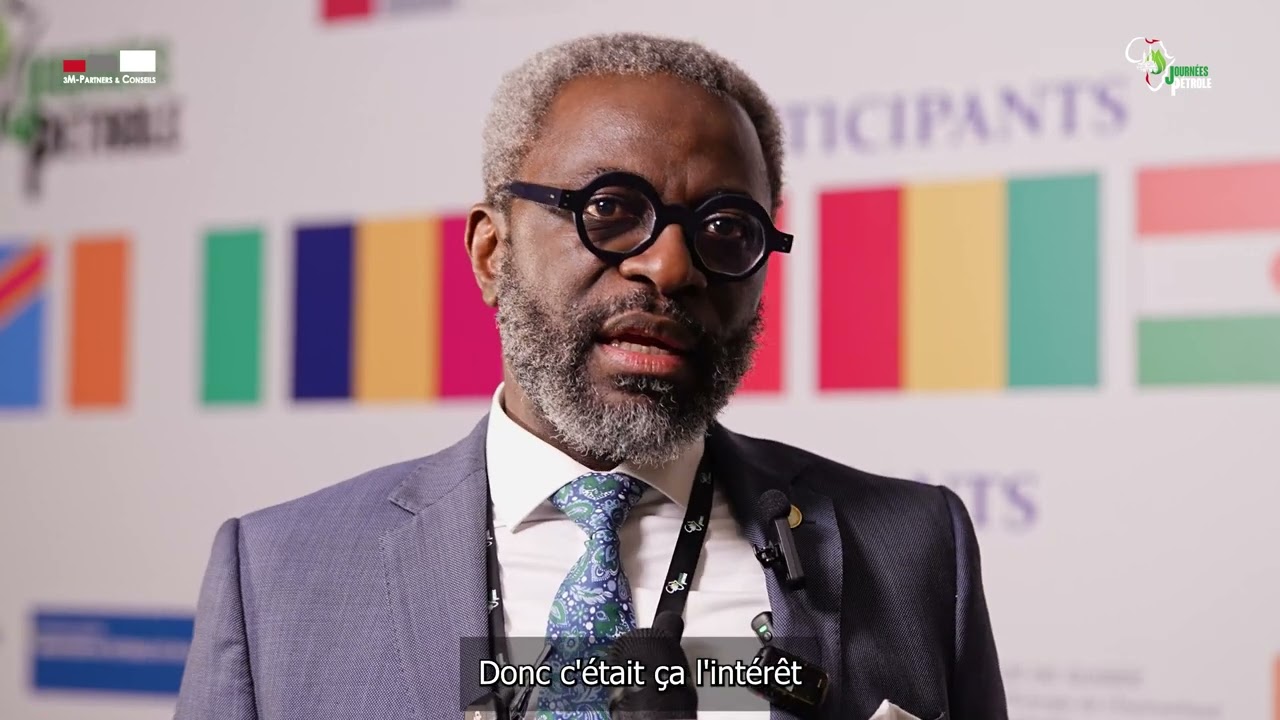
Despite its vast resources—Africa holds nearly 10% of the world’s oil reserves and proven gas reserves exceeding 620 trillion cubic feet—the continent captures only about 8% of global upstream expenditure. This gap between resource potential and investment attraction was a central theme at the 4th edition of Oil Days 2026 in Casablanca, where the question “Can Africa become an oil investment destination as desirable as its vast reserves?” hung over the proceedings.
“Building attractiveness is an essential element for the development of hydrocarbons. If investors do not come to Africa, they cannot develop it,” said Gacyen Mouely, managing partner of 3M-Partners & Conseils, the organizing firm.
The diagnosis is sobering: international investors, burned by decades of unilateral tax changes, arbitration disputes, and locked geological data, now demand predictability before signing a check. To address this, African countries are implementing reforms. Licensing rounds are underway or planned across mature markets—Angola, Nigeria, the Republic of Congo, Equatorial Guinea, Libya, and Egypt—as well as emerging frontiers including Namibia, Sierra Leone, Tanzania, and South Africa.
Morocco, despite not being a major oil producer, was chosen as the host for Oil Days precisely because it offers “an example of attractiveness built on stability, quality of institutions, strength of the legal framework, and performance of infrastructure”.
Looking Ahead: From Ambition to Action
As June’s “Oil, Gas & LNG Month” unfolds, the message from Africa’s energy sector is clear: the continent is ready to move from promise to production. But success is not automatic.
The AEC has called for a fundamental reorientation of global energy policy—one that places African fossil fuels at the centre of energy security, industrial growth, and poverty alleviation. With approximately 600 million people still lacking electricity and over 900 million without clean cooking access, the stakes could not be higher.
“The time has come to drill, baby, drill—responsibly, strategically and to meet the energy needs of hundreds of millions of Africans who still live in darkness,” the AEC declared in its 2026 Outlook.
As African Energy Week 2026 approaches in October, industry leaders will gather in Cape Town to continue the conversation. The agenda will explore exploration breakthroughs, development challenges, and the crucial balance between investment attractiveness and technical complexity.
For now, the verdict is in: Africa’s next energy boom will be won not through discovery alone, but through the gritty, capital-intensive work of building infrastructure, securing supply chains, and delivering results.