

What aileth the Kariba Dam?
The Kariba Dam stands as a monument of a different era. Conceived in the mid-20th century as an engine of post-colonial industrialization for Zambia and Zimbabwe, its vast wall still stands as a testament to human mastery over nature. And yet today, that monument is under siege, not by a single force, but by a perfect storm of interconnected crises. The challenges facing Kariba are no longer just operational headaches; they are a stark case study on how climate change, aging infrastructure, and historical inequities can converge to threaten regional stability.
At the heart of the immediate crisis is a paradox of scarcity amid a designed abundance. The dam’s very purpose—hydroelectric power—is evaporating alongside Lake Kariba’s water. As reported by sources like The Environment and Business Daily, the Zambezi’s declining inflows, driven by El Niño and the broader, relentless drumbeat of climate change, have reduced the reservoir to a shadow of its potential. This is not a temporary drought but a symptom of a new hydrological reality. The dam, built for a certain climate paradigm, now operates in a world it was not designed for, forcing drastic reductions in power generation and plunging both nations into chronic load-shedding that cripple economies and daily life.
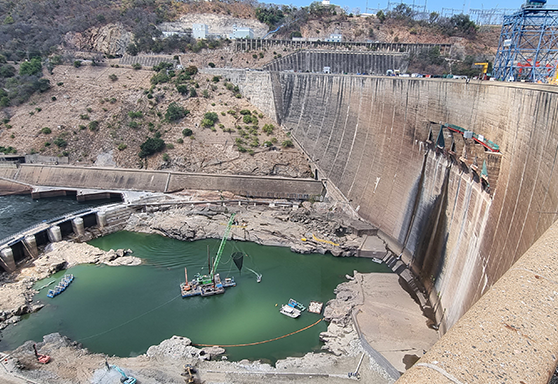
Yet, even if the rains returned to historical norms, Kariba would not be out of peril. The dam is aging under the strain of its own function. The “plunge pool erosion” scouring at its foundation and the “concrete swelling” within its structure are silent, slow-motion threats. While the ongoing Kariba Dam Rehabilitation Project (KDRP) is a critical response, it underscores a relentless truth: the infrastructure of the 20th century demands 21st-century capital and expertise just to stand still. These structural anxieties compound the water crisis, creating a scenario where the dam’s physical capacity to hold water may be restored just as the water itself becomes chronically unavailable.
Beyond the engineering and climatology lies a profound socio-economic irony. Local communities, particularly the Tonga people displaced by the dam’s creation, often live in the shadow of this power giant without reliable access to its electricity. The ecosystem they once relied upon is altered by fluctuating water levels, impacting fisheries and biodiversity. The dam, a symbol of progress, thus perpetuates a legacy of peripheralization, where the costs are borne locally while the strained benefits are allocated nationally.
Finally, this multi-faceted crisis is filtered through the complex lens of shared governance. The Zambezi River Authority (ZRA) must perform a high-wire act of balancing allocations between two sovereign nations, each facing acute domestic energy desperation. As resources shrink, the potential for tension over water allocation—between power, agriculture, and ecology—increases. The dam’s sustainability now hinges not only on technical fixes but on resilient, cooperative diplomacy.
The lesson of Kariba is clear: mega-projects are not one-time solutions but long-term commitments that must evolve with the world around them. Addressing its ailments requires moving beyond reactive maintenance to a holistic strategy. This means:
- Climate-Adaptive Management: Treating water as the most critical component of energy infrastructure, with forecasting and allocation models that prioritize resilience over maximum output.
- Urgent Energy Diversification: Reducing existential dependence on Kariba through accelerated investment in solar, wind, and regional interconnectors to share a more balanced energy mix.
- Integrating Equity into Rehabilitation: Ensuring that refurbishment programs and benefit-sharing mechanisms consciously include the long-marginalized communities in the dam’s vicinity.
- Reinforcing Cooperative Governance: Strengthening the ZRA as an institution capable of making tough, science-based allocations in the face of political pressure.
The Kariba Dam is not just failing to generate power; it is revealing the vulnerabilities of a development model. Its recovery, therefore, must be about more than repairing concrete and hoping for rain. It must be a blueprint for how Africa—and the world—manages its legacy infrastructure in an era of climate uncertainty, ensuring that the giants of the past do not become the anchors of the future.